
David DePuy
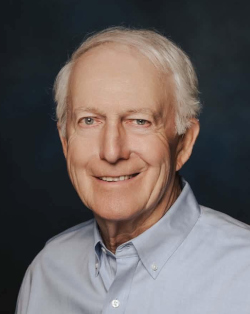
Not an incumbent. No voting record. Their Citizens Count profile
This score comes from a questionnaire, not from votes. David DePuy holds no seat and has cast no roll calls. The scorecard scores votes.
By issue area
- Raise Taxes to Expand GovernmentFrom the Economic Democracy section of the DSA program66.7%2/3
- Grow the State BudgetFrom the Economic Democracy section of the DSA program100%2/2
- Defend the Public School MonopolyFrom the Freedom To Flourish section of the DSA program100%3/3
- Green New Deal Energy MandatesFrom the Green New Deal section of the DSA program100%1/1


Every answer that counted (9)
The question wording is Citizens Count’s. The “aligned answer” column is the answer a DSA-aligned candidate would give, taken from the plank named beside it. Anything David DePuy wrote under an answer is quoted in full, unedited.
| Question | Their answer | Aligned answer | Counted as |
|---|---|---|---|
| Broad-based income taxShould NH add an income tax on earned income?Raise Taxes to Expand Government · Economic Democracy"I oppose a broad-based income tax. But we need to grant relief for our property taxpayers by restoring state appropriations to the towns and reversing tax cuts to big corporations and the very wealthy. Something happens to some people when they get elected to the Legislature. They forget where they come from. Their focus is on cutting taxes at the state level, reducing appropriations to the municipalities, and shifting obligations from the state to the cities and towns. The result is skyrocketing property tax bills. We need to reverse that curse, provide more state funding of towns and place obligations that were pushed onto municipalities back on the state. We need property tax reform as well." | Against | For | Not aligned |
| Interest and Dividends taxShould New Hampshire reinstate the interest and dividends tax?Raise Taxes to Expand Government · Economic Democracy"Last year, the Legislature eliminated the Interest and Dividends (I&D) Tax, a tax we have had in New Hampshire for over 100 years that brought in over $184 million in tax revenue in 2024. That tax fell mainly on the wealthy and the extremely wealthy. In 2023, 21 filers paid over $19 million of that tax, approximately $1 million each. To pay that amount at a tax of 4% requires income of $25 million. To receive income of $25 million assuming a rate of return of 4% requires an investment of $625 million. The fact is that 52% of that tax was paid by 1,723 filers who earned over $200,000 in interest and dividends alone in 2020. The I&D Tax does not apply to interest and dividend income in your IRA, 401(K) or other qualified retirement plans. The excluded amount from the tax was $2,400 per person, $4,800 for joint filers. That threshold amount had remained unchanged for 40 years or so. It needs to be set at $10,000 per person, $20,000 for joint filers, and that excluded amount needs to be adjusted for inflation every year." | For | For | Aligned |
| Business tax decreaseShould New Hampshire lower business taxes?Raise Taxes to Expand Government · Economic Democracy"Business taxes should be restored to the levels that existed prior to the Great Recession. The Business Profits Tax (BPT) has been reduced from 8.5% to 7.5%. The Business Enterprise Tax has been reduced from 0.75% to 0.55%. The Meals and Rooms (M&R) Tax has been reduced from 9.0% to 8.5%. The lost tax revenues from those reductions and the loss of the I&D revenue total approximately $421 million. That is revenue that could have been passed on to the towns. The Legislature had a choice - lower property taxes by appropriating those revenues to the towns and cities or lower taxes on businesses and the ultra-wealthy, thereby raising your property taxes. It chose the latter. Towns have only two sources of revenue - appropriations by the Legislature and property taxes. Reduce state appropriations and property taxes go up - and that is what the Legislature has been doing for 20 years. We need to Reverse the Concord Curse and elect legislators who do not forget where they came from, and make funding of our towns and schools a priority." | Against | Against | Aligned |
| Fund the Office of the Child AdvocateShould New Hampshire restore funding for the Office of the Child Advocate?Grow the State Budget · Economic Democracy | For | For | Aligned |
| School district tax cap mandateShould state law cap how much local school districts can increase their budget each year?Grow the State Budget · Economic Democracy"The local school boards know best how much the town needs to spend on its schools. Capping that spending by the state would replace a well-informed decision with an uneducated political limit. I am against any state takeover of local spending decisions, including legislation capping local school funding. School funding comes from two principal sources, local property taxes and state appropriations. The present legislation passed by the Legislature mandating voters to consider placing a cap on local school spending not to exceed the rate of inflation threatens adequate funding of our schools. If the Legislature's contribution to public schools did not keep up with the rate of inflation, which it hasn't for over 18 years, towns would be prohibited from making up that lost state contribution, as to do so they would need to exceed the rate of inflation on their share." | Against | Against | Aligned |
| "Education Freedom Account" programDo you support the “Education Freedom Account” program, which gives students access to the per-pupil share of state school funding to spend on private school or home school expenses?Defend the Public School Monopoly · Freedom To Flourish"Please see my op-ed in the Union Leader of February 18, 2025. Proponents of this program continue to make the false argument that paying $5,000 for a student in the EFA program saves taxpayers money because the average cost of a public school education is $22,000 so that towns save money for every kid who receives $5,000 for the EFA program. This argument is false for two reasons: First, 80% of the kids entered in the EFA program were never in the public schools to begin with, so the towns are saving nothing and the $5,000 is just an added expense. Second, the towns save nothing for the remaining 2,000 kids who do leave public schools because there are 454 public schools. On average that is about five kids who leave a public school. Even if the number were 25 students per school, having two kids fewer per class in the 13 grades saves towns nothing because most costs are fixed, like bonds, heating and cooling, teachers' salaries, bus transportation, etc. The best private schools cost $45,000 to $60,000 per year or more. Proponents of the EFA program are the same ones who argue more money does not make for a better education. There are many wealthy parents sending their kids to private schools who believe otherwise. The state constitution provides that 'no person shall ever be compelled to pay toward the support of the schools of any sect or denomination' (N.H. Constitution, Article 6). Proponents argue that the EFA payments are not paid to religious schools but rather to parents who then pay the money to religious schools and that such a scheme has been condoned in court cases. I am not a fan of schemes devised by the Legislature that devise a way to skirt the Constitution of New Hampshire. Frank Edelblut, our recently replaced commissioner of education, and his wife have seven children. All were homeschooled. If the EFA program had been available to them at the time when their kids were in school, that would be $5,000 per child, per year, for 13 years (K-12), or $65,000 per child. For seven kids, that would total $455,000. Almost half a million dollars to the Edelbluts, who I suspect are very well off." | Against | Against | Aligned |
| Public school open enrollment with limitsShould New Hampshire allow at least 10% of students in each school district to enroll in a different public school, regardless of where they live?Defend the Public School Monopoly · Freedom To Flourish"This is just one more contrivance by the Legislature to avoid its obligation to appropriate funds to the municipalities to provide an adequate public school education for our children. This legislation would burden some towns and residents unfairly. With limits sounds fine, but the limits are by definition subject to change by the Legislature. Look at the EFA program. It started small, 2,500 kids for those whose families lacked the resources to homeschool their kids. Now it's grown to over 10,000 kids of parents whose income is in the millions to send their kids to elite private schools." | Against | Against | Aligned |
| Majority of public school funding through local property taxesDo you support New Hampshire’s current system of public school funding, with about two-thirds of total funding coming from local property taxes?Defend the Public School Monopoly · Freedom To Flourish"The state needs to pay more - much more. Right now, property taxes provide a staggering 60% or more of total state and local tax revenues. Local property taxes are approximately 52%. The Statewide Education Property Tax (SWEPT), which you pay in addition to your local property taxes, is 5%. The Real Estate Transfer Tax is 3%. Those three total 60%. The state now pays less than 30% of public school costs, while municipalities pay over 63%. The federal government pays about 8%. The state should pay the municipalities at least 50% of actual school costs. We should not be fighting the state over this. The state should be on our side." | Against | Against | Aligned |
| Expand net metering opportunitiesDo you support legislation to expand the net energy metering system capacity cap from 1 MW to 5 MW for all residential and commercial customers in New Hampshire?Green New Deal Energy Mandates · Green New Deal"We need to expand clean energy sources and reduce our dependence on oil and gas for multiple reasons: 1. To reduce pollution. 2. To slow global warming. 3. To change to renewable energy. 4. To develop cheaper sources of heat, cooling and electricity. Wind and solar energy are the future. Supplying the grid with power is good ecology as well as good economics." | For | For | Aligned |
Left out of the score (2)
“Undecided”, “Other” and unanswered questions are excluded from the arithmetic, exactly as an absence is excluded on a roll call. None of these counted against David DePuy.
- Allow segregation based on biological sexOther
- Proof of citizenship for newly registered votersOther
Photo via David DePuy’s Citizens Count profile.
All 203 scored candidates · Check every answer against the Citizens Count profile
Share this rating
The grade, the score and what it is made of, as a picture sized for where it is going. Pasting this page’s address into a post shows the link preview on its own.
Granite Solutions rating, from published candidate survey answers. Not a DSA endorsement. Methodology